
What are the standard requirements for choosing and installing lead glass?
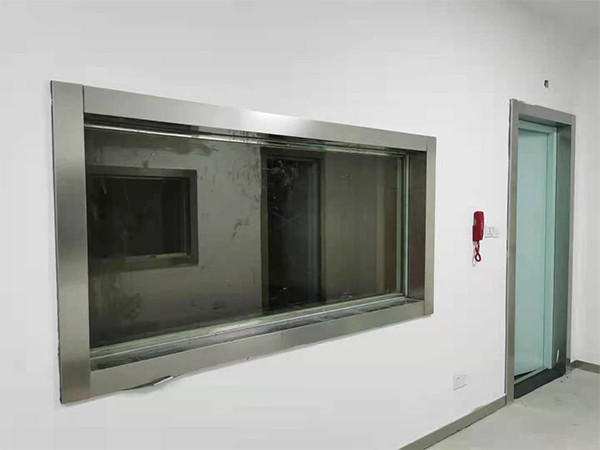
1. Key Specs for Choosing Lead Glass
Lead Equivalent Requirements:
ZF2/ZF3: Light transmittance ≥80%, good for normal X-ray rooms
ZF6/ZF7: Lead equivalent ≥5.0mmPb, for nuclear facilities or high-energy gamma ray protection
Medical Scenes: Main protection areas (like CT rooms) ≥2.5mmPb, secondary areas (like control rooms) ≥1.0mmPb
Industrial Scenes: Pick based on radiation energy (for example, 2.0mmPb needed at 150kVp)
Grade Selection:
Physical Properties:
Density: ≥4.2g/cm³ (ZF3 type)
Light Transmittance: ≥80% at 550nm wavelength, dispersion coefficient ≤50
Impact Resistance: Pass 1.2m steel ball drop test (no breakage)
Size Specs:
Standard Thickness: 10mm, 15mm, 18mm, 20mm (±0.5mm tolerance)
Max Size: 2000mm×1200mm (custom processing required)
2. Preparation Before Installation
Environmental Requirements
Temperature: 15-30°C, Humidity ≤ 60% (to avoid acid corrosion)
Foundation Conditions: Wall flatness error ≤ 2mm/m, spacing between embedded parts ≤ 600mm
Material Inspection
Lead Equivalence Verification: Measured using a γ-ray detector, error ±5%
Appearance Check: Surface should be free of bubbles and scratches, edges polished smooth (roughness Ra ≤ 3.2μm)
Tool Setup
Suction cup (load capacity ≥ 50kg), cutting machine (accuracy ±0.1mm), edge grinder (chamfer R ≥ 1mm)
3. Installation Specifications
Fixing Method
Frame Installation:
304 stainless steel frame (thickness ≥2mm), fixed with expansion bolts (M8×100mm, spacing ≤500mm)
Embedded Installation:
Fill the gap between the glass and wall with lead rubber strips (thickness ≥5mm), overlap width ≥50mm
Sealing
Joint Sealing:
EPDM rubber sealant (thickness ≥8mm), filling depth ≥3mm
Edge Protection:
Wrap all around with 1.0mm thick lead plates, fitting snugly with the frame
Seismic Design:
For high-rise buildings, use flexible connections (rubber shock pads), leaving a 5-10mm expansion gap between the frame and wall
4.Maintenance and Lifespan Management
Daily Maintenance:
Check the integrity of sealant strips every month (replace if aging cracks are ≥1mm deep).
Randomly inspect with a lead equivalence detector every quarter (replace immediately if error exceeds ±5%).
Lifespan Assessment:
Routine scenarios: Service life ≥10 years (lead equivalence decay rate ≤5% per year).
High-radiation scenarios: Nuclear medicine departments need to test every 5 years; replace if decay rate exceeds 10%.
Disposal:
Package according to radioactive waste standards (wrap lead glass with lead sheets and label with activity and half-life).
lead glass
Technical Requirements for X-Ray Protective Clothing


