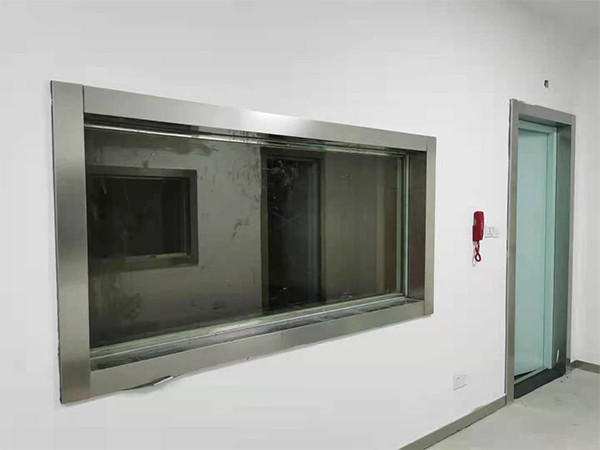
lead glass
2026-09-08

Lead Glass: Properties, Applications and Practical Advantages
Lead glass is a special functional glass doped with lead oxide (PbO), which differs greatly from ordinary soda-lime glass in chemical composition, physical performance and practical value. Generally, qualified lead glass contains 18% to 40% lead oxide by weight, and products with a lead oxide content of more than 24% are defined as high-standard lead crystal glass with superior comprehensive performance. By replacing the calcium component in traditional glass formula with lead elements, this material achieves unique optical and radiation-proof properties, making it an indispensable special material in modern industry, medical treatment and scientific research fields.
One of the most prominent features of lead glass is its excellent radiation shielding capability. Thanks to the high atomic weight and high density of lead elements, lead glass can effectively absorb and attenuate ionizing radiation such as X-rays and gamma rays. Different from ordinary transparent glass which cannot block radiation, lead glass is professionally engineered for radiation protection. It can provide stable and reliable shielding effects while maintaining high light transmittance, solving the core problem of “no visibility with shielding, no protection with visibility” in radiation work scenarios. Different thicknesses of lead glass correspond to different lead equivalent values, which can meet the radiation protection requirements of low-dose to high-dose radiation environments.
In terms of optical and physical properties, the addition of lead oxide significantly improves the refractive index and density of glass. This gives lead glass high clarity, soft luster and delicate light-dispersing effect. Compared with ordinary glass, it has lower viscosity and more stable chemical properties, not easy to deform, oxidize or corrode in conventional working environments. In addition, lead glass features uniform texture, flat surface and stable light transmission, which will not produce visual distortion, ensuring clear observation of the operating environment while achieving radiation protection.
Lead glass has a wide range of professional application scenarios, mainly concentrated in radiation hazardous working areas. In the medical field, it is widely used as observation windows and protective isolation glass for X-ray rooms, CT scanning rooms, DSA interventional operating rooms, radiotherapy rooms and pet-CT examination rooms, protecting medical staff from long-term radiation exposure. In industrial and scientific research fields, it serves as protective observation windows for industrial flaw detection, nuclear power facilities, isotope laboratories and radiation inspection equipment. At the same time, it is also applied in manufacturing radiation-proof protective screens and observation partitions, providing safe working conditions for operators.
In practical application, lead glass has obvious comprehensive advantages. It balances high radiation protection performance and high light transmittance perfectly, which cannot be replaced by metal shielding materials. Metal shieldings can block radiation completely but block the line of sight, while ordinary transparent materials are visible but lack protection. Lead glass just makes up for this deficiency. Moreover, it has long service life, stable performance, simple maintenance and strong environmental adaptability, suitable for long-term continuous use in various professional radiation protection environments.
In conclusion, as a professional radiation shielding transparent material, lead glass plays an irreplaceable role in medical protection, nuclear industry and industrial detection. With its unique chemical composition, superior radiation resistance and excellent optical performance, it effectively guarantees the personal safety of staff in radiation environments and supports the stable operation of various professional industries. It is one of the key special materials in modern safety protection engineering.
Lead glass is a special functional glass doped with lead oxide (PbO), which differs greatly from ordinary soda-lime glass in chemical composition, physical performance and practical value. Generally, qualified lead glass contains 18% to 40% lead oxide by weight, and products with a lead oxide content of more than 24% are defined as high-standard lead crystal glass with superior comprehensive performance. By replacing the calcium component in traditional glass formula with lead elements, this material achieves unique optical and radiation-proof properties, making it an indispensable special material in modern industry, medical treatment and scientific research fields.
One of the most prominent features of lead glass is its excellent radiation shielding capability. Thanks to the high atomic weight and high density of lead elements, lead glass can effectively absorb and attenuate ionizing radiation such as X-rays and gamma rays. Different from ordinary transparent glass which cannot block radiation, lead glass is professionally engineered for radiation protection. It can provide stable and reliable shielding effects while maintaining high light transmittance, solving the core problem of “no visibility with shielding, no protection with visibility” in radiation work scenarios. Different thicknesses of lead glass correspond to different lead equivalent values, which can meet the radiation protection requirements of low-dose to high-dose radiation environments.
In terms of optical and physical properties, the addition of lead oxide significantly improves the refractive index and density of glass. This gives lead glass high clarity, soft luster and delicate light-dispersing effect. Compared with ordinary glass, it has lower viscosity and more stable chemical properties, not easy to deform, oxidize or corrode in conventional working environments. In addition, lead glass features uniform texture, flat surface and stable light transmission, which will not produce visual distortion, ensuring clear observation of the operating environment while achieving radiation protection.
Lead glass has a wide range of professional application scenarios, mainly concentrated in radiation hazardous working areas. In the medical field, it is widely used as observation windows and protective isolation glass for X-ray rooms, CT scanning rooms, DSA interventional operating rooms, radiotherapy rooms and pet-CT examination rooms, protecting medical staff from long-term radiation exposure. In industrial and scientific research fields, it serves as protective observation windows for industrial flaw detection, nuclear power facilities, isotope laboratories and radiation inspection equipment. At the same time, it is also applied in manufacturing radiation-proof protective screens and observation partitions, providing safe working conditions for operators.
In practical application, lead glass has obvious comprehensive advantages. It balances high radiation protection performance and high light transmittance perfectly, which cannot be replaced by metal shielding materials. Metal shieldings can block radiation completely but block the line of sight, while ordinary transparent materials are visible but lack protection. Lead glass just makes up for this deficiency. Moreover, it has long service life, stable performance, simple maintenance and strong environmental adaptability, suitable for long-term continuous use in various professional radiation protection environments.
In conclusion, as a professional radiation shielding transparent material, lead glass plays an irreplaceable role in medical protection, nuclear industry and industrial detection. With its unique chemical composition, superior radiation resistance and excellent optical performance, it effectively guarantees the personal safety of staff in radiation environments and supports the stable operation of various professional industries. It is one of the key special materials in modern safety protection engineering.
What are the standard requirements for choosing and installing lead glass?